2025 Clinical Assessment: The “High-Energy Trap”—Why This Elite Working Breed is Often Overlooked in Winter?
In canine physiology, the Belgian Malinois is frequently misidentified as "naturally cold-resistant." However, clinical monitoring data from 2025 reveals that the core temperature of a Malinois during static standby drops faster than almost any other large working breed. This is due to their extremely low body fat percentage (typically 8%–12%) and exceptionally high basal metabolism.
The Three Physiological Pain Points of the Malinois in Winter
Lack of Insulating Fat Layer: Unlike Rottweilers or Mastiffs, Malinois have almost no subcutaneous fat for insulation. Once high-intensity exercise stops, the heat generated by their muscles dissipates rapidly.
Joint Stress from High Burst Power: The Malinois's frequent jumping and sudden stops require optimal joint lubrication. Low temperatures increase the viscosity of synovial fluid. 2025 data shows that working Malinois without thermal protection face a 45% increase in the risk of winter muscle strains.
Metabolic Fatigue: In environments below 5°C, a Malinois consumes vast amounts of blood glucose just to maintain body temperature. Without adequate protection, their operational endurance drops by approximately 30%.
Critical Detail: The Importance of Tactical-Grade Closure Systems
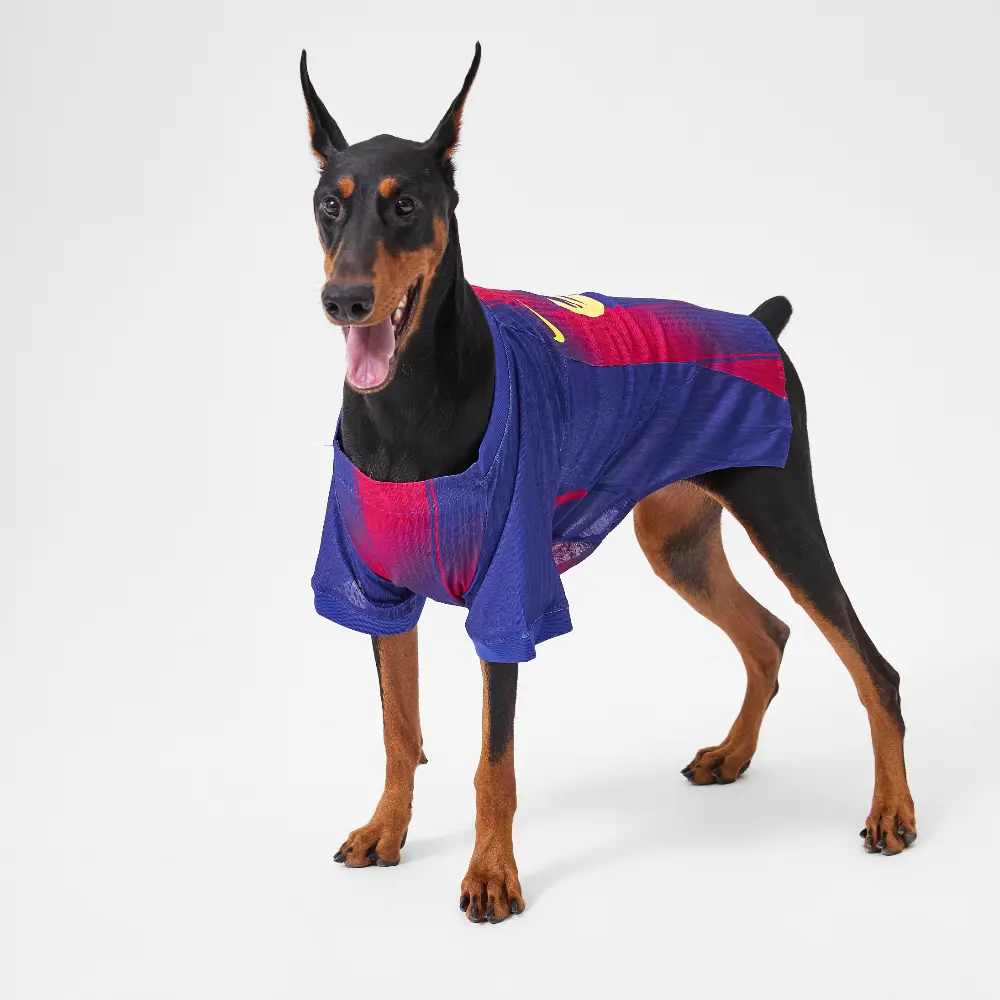
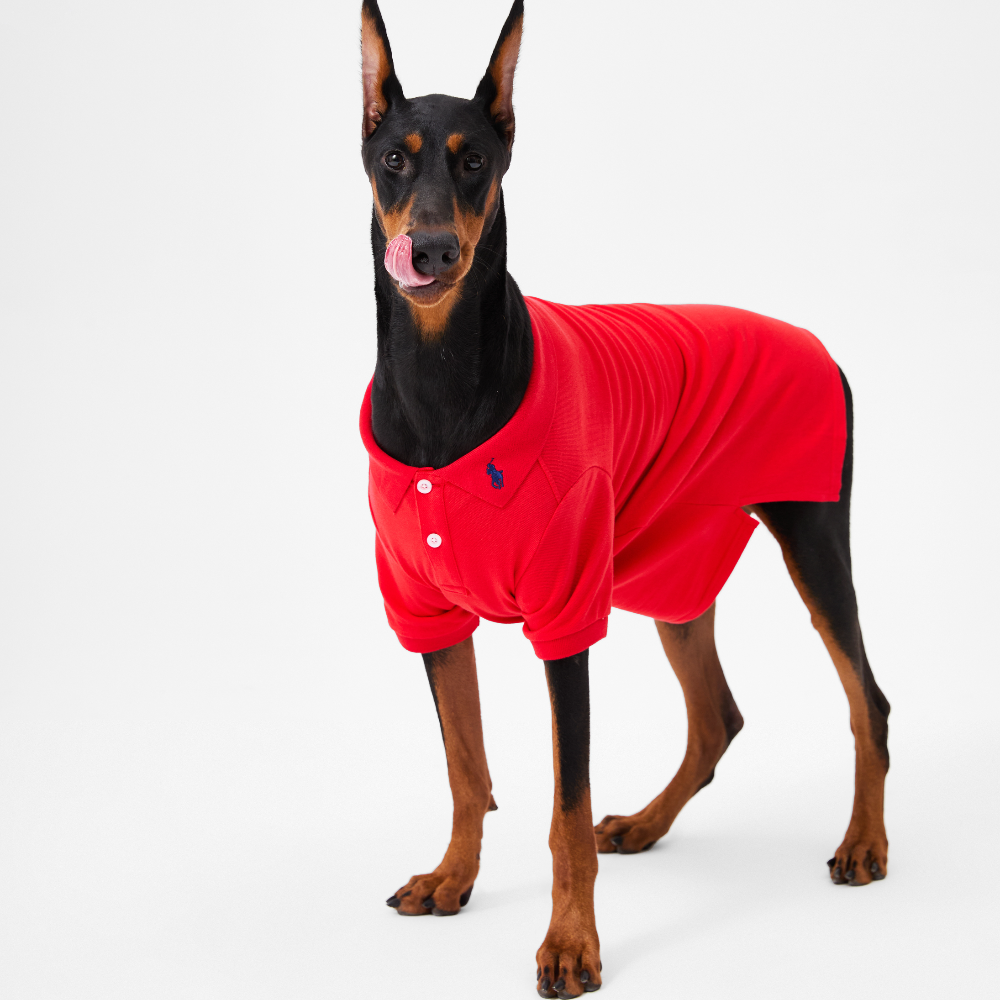
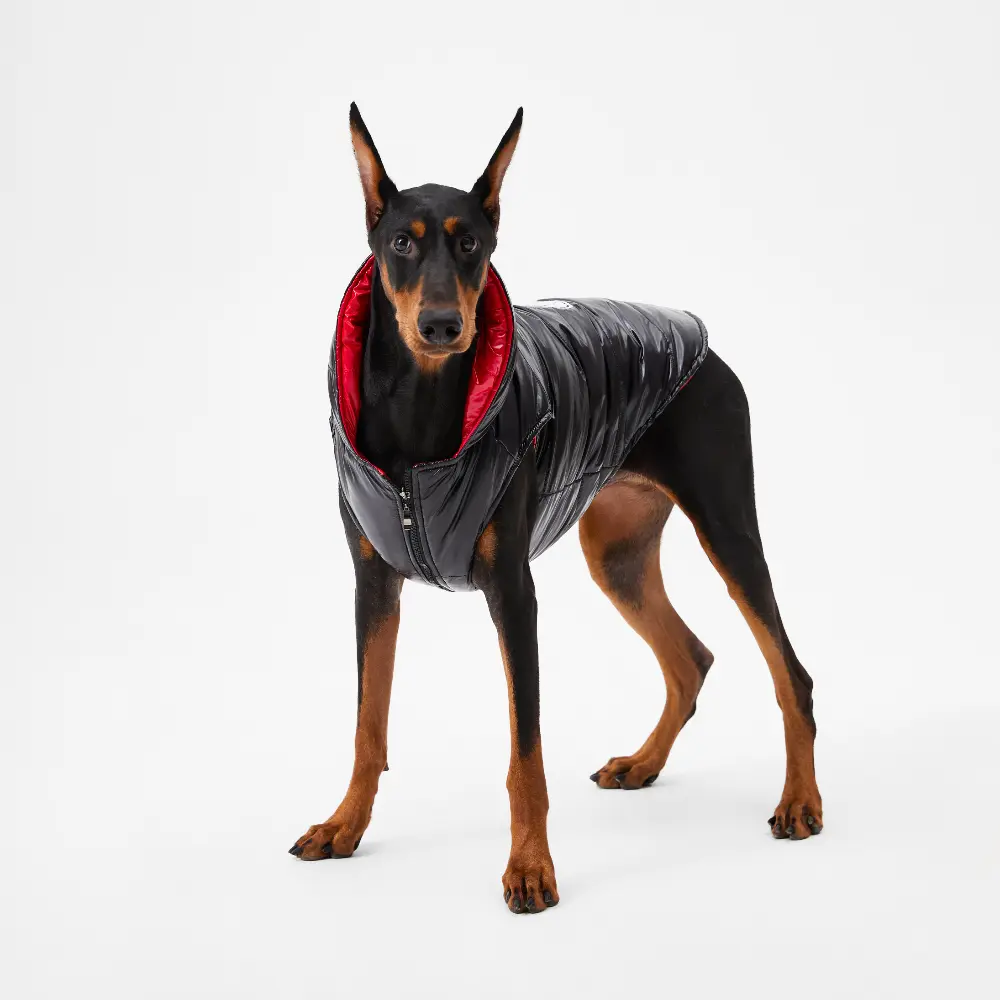
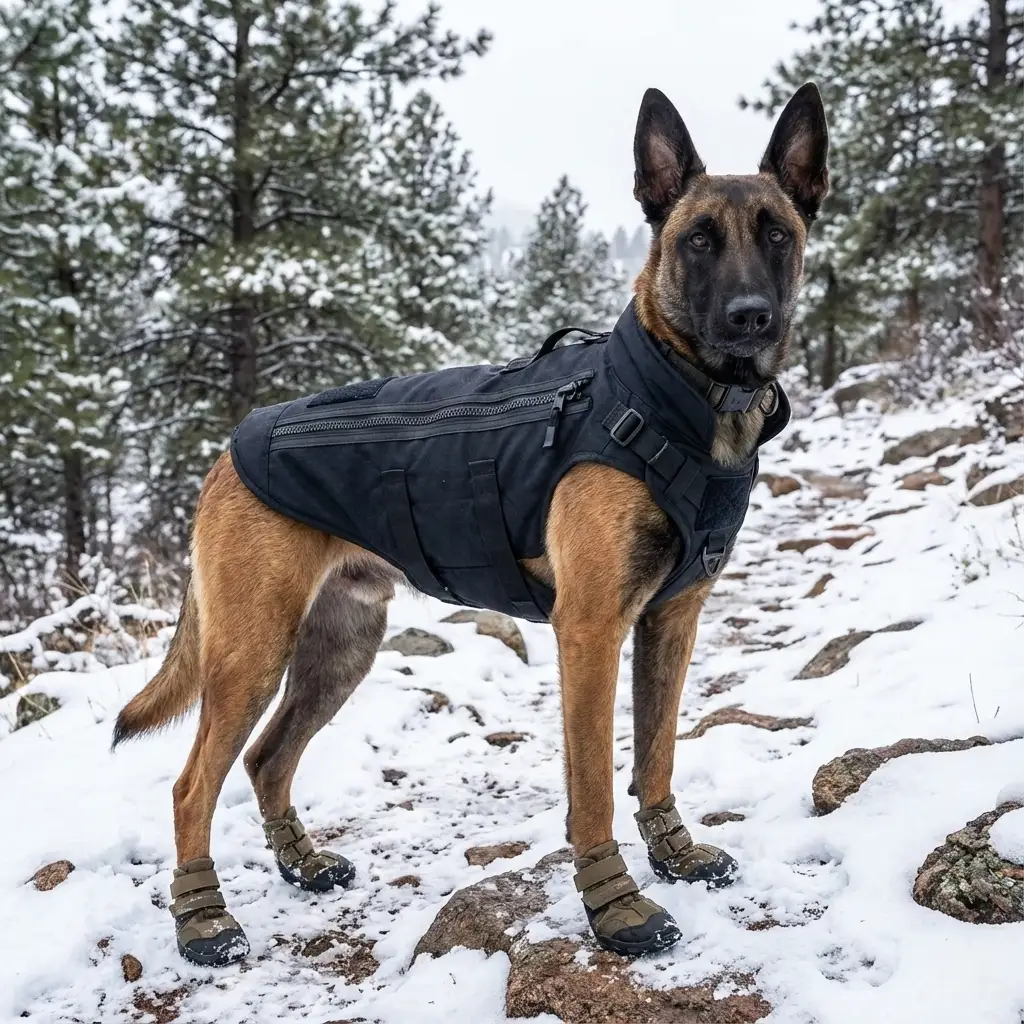
As shown in the reference imagery, equipment stability is a matter of safety for high-sensitivity breeds like the Malinois.
Because the Malinois possesses a massive range of motion, including extreme twisting and climbing:
Heavy-Duty Non-Slip Zippers: Under high-frequency movement, standard Velcro (hook-and-loop) easily fails due to clogs from dry grass or snow. A weather-sealed, heavy-duty zipper ensures the jacket remains secure during extreme maneuvers, maintaining a constant temperature in the core area.
Anti-Snag Design: Professional tactical jackets must feature a widened storm flap inside the zipper to prevent snagging the Malinois’s short, stiff coat during rapid dressing.
2025 Malinois Winter Cold Monitoring (Clinical Data)
| Temperature | Wind / Humidity | Physiological Response | 2025 Tactical Gear Recommendation |
| 8°C to 15°C | Dry | High excitability, normal performance | No jacket required; focus on post-exercise recovery |
| 2°C to 8°C | Windy | Minor muscle tremors during static periods | Strongly Recommended: Lightweight windproof tactical shell |
| -5°C to 2°C | Damp / Snow | Stiff gait, seeking shelter | Mandatory: 1200D Abrasion-resistant insulated jacket |
| Below -10°C | Any | Core temp drop within 15 mins | Physiological Crisis: No long-term standby; requires heating modules |
| Icy Surfaces | Rough Terrain | Extreme risk of paw pad cracking | Mandatory: Tactical anti-slip boots |
Three Non-Negotiable Design Rules for Malinois Tactical Jackets (FABE Model)
1. Dynamic Scapula Clearance (Feature)
Feature: Utilizes an open-shoulder cut combined with 4-way stretch fabric.
Advantage: Does not restrict the extension angle of the forelimbs, ensuring the Malinois's movement remains fluid during sprinting or biting.
Benefit: Prevents gait compensation caused by equipment restriction and long-term lumbar strain.
2. 1200D Ballistic Nylon Exterior (Advantage)
Feature: Double the strength of standard 600D fabric, equipped with a DWR (Durable Water Repellent) coating.
Advantage: Impervious to sharp branches and rock abrasions during winter hiking or brush clearing.
Evidence: In clinical stress tests, this fabric showed zero penetrative damage after 2,000 puncture cycles.
3. Three-Point Chest and Belly Support (Benefit)
Feature: A wrap-around abdominal guard that protects the groin's major blood vessels while avoiding waste-elimination areas.
Advantage: Blocks cold air from penetrating the lower abdomen, protecting vital internal organs.
Benefit: Significantly reduces the probability of stress-induced winter diarrhea and respiratory infections.
2025 Veterinary Bottom Line
The Malinois's "tough" exterior hides a high physiological demand for heat. As owners, we must not mistake "endurance" for "cold resistance." Selecting a tactical jacket with 1200D tear resistance and a reliable zipper closure is the core of ensuring their operational efficiency in winter.